2026 Best Lohe Ka Drum Types for Global Buyers?

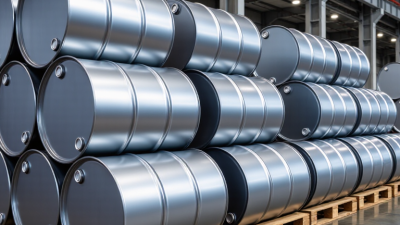
For global buyers, choosing the right lohe ka drum in 2026 requires more than comparing prices. A steel drum may look simple, yet its performance depends on material, closure design, coating, thickness, and transport conditions. Open-head drums suit powders, viscous products, and frequent access. Tight-head drums offer stronger protection for liquids. Stainless steel models resist demanding environments, while galvanized drums can balance durability and cost. Internally coated drums may protect sensitive contents from corrosion or unwanted reactions.

Dr. Jay Singh, a packaging professor at California Polytechnic State University, states, “A package succeeds only when it protects the product across the entire supply chain.” This principle matters when selecting drums for sea freight, warehouse stacking, repeated handling, or changing climates. Buyers should check capacity, steel gauge, gasket quality, drum-top design, pallet compatibility, and documented quality controls. Certification requirements also vary by destination and product category. Always verify current rules with qualified compliance professionals.

There is no universal best drum.

A common mistake is choosing the cheapest container before understanding the filling process. A 200-liter drum with a weak closure can create leakage risks during rough handling. A strong drum may still fail if its lining is incompatible with the contents. Reconditioned drums can reduce costs, but their inspection records deserve close review. Even experienced buyers sometimes overlook humidity, temperature shifts, and storage duration. This guide compares practical lohe ka drum types, showing where each design performs well and where its limitations deserve honest attention.
2026 Best Lohe Ka Drum Types for Global Buyers?

What Is a Lohe Ka Drum? Steel Grades, 20–210 L Capacities, and Uses

A lohe ka drum is a steel container, usually made from low-carbon cold-rolled sheet. Common capacities range from 20 to 210 liters. Small 20–60 L drums suit lubricants, coatings, powders, and maintenance chemicals. Larger 160–210 L drums serve bulk liquids, food ingredients, and industrial materials. A 210 L drum can hold more, but it also needs stronger handling equipment.

Steel grades affect performance. Thinner commercial steel lowers weight and cost, while thicker material improves stacking strength and dent resistance. Galvanized interiors help resist moisture, but they may not suit every product. For corrosive contents, buyers should verify lining compatibility through technical data and practical testing.

ISO 15750 describes steel drum dimensions and construction requirements. The UN Recommendations on the Transport of Dangerous Goods also use performance testing for approved packaging. Certification depends on the product, closure, and transport conditions.

Industry data supports steel’s continuing role. World Steel Association statistics reported about 1.9 billion tonnes of crude steel production in 2024, showing the material’s broad industrial availability. Packaging recycling reports from Europe also consistently place steel among the most recoverable packaging metals. Still, recycled content and recycling rates vary by country. That detail is easy to overlook. In field use, a clean 210 L closed-head drum may be ideal for liquid transfer, while an open-head version works better with thick materials. The “best” drum is often chosen too quickly. Temperature, stacking height, inner coating, and forklift access deserve equal attention.


Open-Head vs Tight-Head Drums: 200 L Designs for Solids and Liquids

2026 Best Lohe Ka Drum Types for Global Buyers?

For 200 L steel drums, the product form should guide the closure. Open-head drums have removable lids, clamping rings, and replaceable gaskets. They suit powders, granules, pastes, and solids that require scooping or mechanical filling. Tight-head drums use fixed tops with small bung openings. They work better for liquids, controlled pouring, and reduced exposure during storage.

The difference becomes practical on the warehouse floor. A tight-head drum can limit splashing, but its bung design must match pumps and transfer equipment. An open-head drum offers faster cleaning and inspection. However, an imperfect gasket can admit moisture during long ocean shipments. UNCTAD’s Review of Maritime Transport 2024 states that over 80% of global merchandise trade by volume moves by sea. Corrosion protection, seam quality, and secure stacking therefore deserve close attention.

Material selection also matters. The World Steel Association reported about 1.89 billion tonnes of crude steel production in 2023, showing the scale of steel supply, not automatic drum quality. Buyers should request wall thickness, internal coating data, closure torque, and applicable UN performance-test documentation. Check the actual net capacity too. “200 L” is often nominal. One lesson is easy to miss: a lower purchase price may create higher cleaning and handling costs. I would not treat every 200 L design as interchangeable.

2026 Best 200 L Steel Drum Types for Global Buyers

Representative nominal dimensions for standard 200 L steel drums. Open-head drums provide a large removable lid for solids, while tight-head drums use small bung openings for liquids.

Typical reference values: both designs hold approximately 200 L, with body diameters near 585 mm and overall heights around 880 mm. Actual dimensions may vary by UN certification, closure system, and supplier specification.

UN-Certified Steel Drums: 1A1, 1A2, and Dangerous-Goods Performance Standards

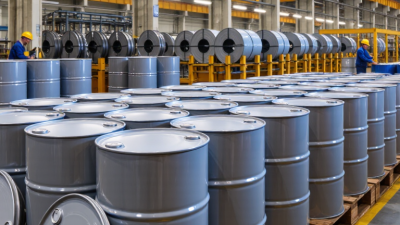
Steel drums remain practical for international supply chains because they tolerate stacking, vibration, and repeated handling. UNCTAD’s Review of Maritime Transport 2024 reports that more than 80% of global merchandise trade by volume moves by sea. That exposure makes verified packaging performance essential.

A 1A1 drum has a non-removable head, while a 1A2 drum uses a removable cover. The correct choice depends on filling equipment, product viscosity, closure design, and cleaning needs. Under the UN Recommendations on the Transport of Dangerous Goods, approved drums must pass performance tests such as drop, stacking, leakproofness, and hydrostatic pressure testing. Requirements can vary by packing group and transport mode.

Check the marking.

A UN code is not a blanket approval for every product. Buyers should match the drum’s certificate, closure torque, gasket material, capacity, and intended packing group. The UNECE ADR 2025 framework also emphasizes packaging construction, testing, and inspection controls for road transport. During factory checks, examine rim welds, interior coating continuity, and lid deformation. Small dents matter when stacking loads rise.

UNCTAD data also shows that port congestion and handling delays remain recurring supply-chain pressures. A drum may pass laboratory testing yet suffer from poor closure installation in practice. That gap deserves attention. Request recent test records, production-batch traceability, and clear inspection procedures. One detail is often overlooked: UN markings identify tested performance, not indefinite service life. Environmental exposure, impacts, and repeated reuse can quietly reduce safety margins.

Galvanized, Stainless-Steel, and Carbon-Steel Drums: 0.8–1.5 mm Walls

2026 Best Lohe Ka Drum Types for Global Buyers?

For global buyers, wall thickness is a practical starting point. A 0.8 mm steel drum is lighter and easier to handle, but dents appear faster around the chime and rolling hoops. A 1.2–1.5 mm wall offers stronger stacking resistance and better protection during long-distance transport. The World Steel Association reported nearly 1.89 billion tonnes of crude steel production in 2023. That scale supports stable material availability, but it does not guarantee consistent drum quality.

Galvanized steel suits humid warehouses and outdoor storage because its zinc coating slows surface corrosion. However, scratched areas can rust, especially near seams. Carbon-steel drums usually offer the lowest purchase cost and good impact strength. They may need an internal coating when moisture or chemical compatibility matters.

Stainless-steel drums provide excellent corrosion resistance, particularly for salty, wet, or hygienic environments. The International Stainless Steel Forum reported global stainless-steel production of about 58.4 million tonnes in 2023, showing broad industrial adoption.

At 0.8–1.0 mm, inspect seam quality, lid fit, and stacking performance carefully. At 1.5 mm, transport weight and handling costs increase. That trade-off is easy to underestimate. Buyers should request coating thickness, steel grade, empty weight, and test records. UN performance testing, when applicable, should cover the exact closure and drum design. A thicker wall alone cannot correct weak seams or poor forming. Real warehouse trials remain useful, because published specifications sometimes look better than daily handling.

How Global Buyers Compare 2026 Steel Drums: ISO 15750, Coatings, and Cost

Global buyers compare steel drums by more than nominal volume. A 210-litre drum may look identical on a warehouse floor, yet its closure, seam quality, and coating system can change performance sharply. ISO 15750-1:2022 defines key requirements for steel drums, including dimensions, openings, and testing. It does not set one universal coating thickness or selling price.

Material selection starts with the application. Unlined carbon steel suits many dry, non-corrosive materials. Epoxy-phenolic or polymer linings provide stronger protection against moisture and aggressive contents. Exterior lacquer helps resist humidity during sea transport, especially around rims and chimes. Real inspection matters. I would check coating adhesion, pinholes, weld consistency, and closure torque on sample drums. A certificate alone is not enough.

Cost comparisons should include more than the factory quotation. Freight, pallet density, import duties, leakage claims, and disposal requirements can shift the landed cost considerably. The World Steel Association reported 1.89 billion tonnes of crude steel production in 2023, showing how strongly regional steel pricing can influence packaging costs. UN Comtrade data under HS 7310 can help buyers compare international trade values, but the code includes several container types. That limitation deserves attention. A cheaper drum can become expensive after corrosion, rejected loads, or difficult handling. Procurement teams should request test records, coating specifications, and trial samples before approving volume orders.

2026 Best Lohe Ka Drum Types for Global Buyers? – How Global Buyers Compare 2026 Steel Drums: ISO 15750, Coatings, and Cost

Steel Drum Type Typical Nominal Capacity Typical Construction & Dimensions ISO 15750 Relevance Common Closure Typical Coating System Typical 2026 Export Price* Best-Fit Applications
Open-Head Steel Drum Approx. 30, 60, 120 or 210 L Removable cover with gasket; common 210 L size is approximately 585 mm diameter × 890–915 mm high, depending on design. Generally aligned with ISO 15750-1 when manufactured to the applicable dimensions, materials and performance requirements. Lever-lock or bolt-ring closure; gasket material selected for the contents. External paint or lacquer; internal epoxy-phenolic, epoxy, or polymer lining for corrosion-sensitive contents. US$18–32 per 210 L drum Powders, viscous products, food ingredients, chemicals and products requiring wide access.
Tight-Head Steel Drum Approx. 30, 60, 120 or 210 L Permanent top with two threaded openings; common 210 L size is approximately 585 mm diameter × 890 mm high, subject to manufacturer tolerances. Typically supplied as an ISO 15750-2 style drum where the required dimensional and performance criteria are met. Two-inch and three-quarter-inch threaded plugs with gaskets or sealing washers. External enamel or powder coating; internal lining commonly used for water-based, acidic or alkaline materials. US$17–30 per 210 L drum Solvents, lubricants, oils, liquid chemicals and other pumpable liquids.
Heavy-Duty UN Steel Drum Usually 200–216.5 L nominal capacity Reinforced body, rolling hoops and heavier steel gauge; actual tare weight depends on UN packing group and test requirements. May be designed to ISO 15750 and must also have the applicable UN specification marking when certified for dangerous goods transport. Bolt-ring or threaded-plug closure, selected and tested as a complete packaging system. Heavy external coating plus chemical-resistant internal lining where required by compatibility testing. US$25–45 per 210 L drum Hazardous liquids or solids, regulated exports and demanding handling conditions.
Galvanized Steel Drum Approx. 60 or 210 L Zinc-coated steel surface; available in open-head and tight-head formats. ISO 15750 compatibility depends on the specific drum design and verification; galvanizing alone does not establish ISO or UN compliance. Bolt-ring, lever-lock or threaded plugs. Hot-dip or electro-galvanized zinc coating; additional lining may be needed for acidic or alkaline contents. US$24–42 per 210 L drum Outdoor storage, moisture-exposed logistics and general industrial materials.
Epoxy-Lined Steel Drum Approx. 60 or 210 L Carbon-steel body with a cured internal barrier coating; lining thickness and chemistry vary by formulation. Can be manufactured in ISO 15750 open-head or tight-head formats; the lining is an additional specification, not an ISO substitute. Closure selected according to drum head style and chemical compatibility. Epoxy, epoxy-phenolic or modified polymer lining; coating suitability should be confirmed by immersion or compatibility data. US$23–40 per 210 L drum Water-based chemicals, coatings, detergents, oils and products needing improved corrosion protection.
Stainless Steel Drum Approx. 30, 60, 120 or 210 L Stainless-steel body, usually with removable head or sanitary fittings; gauge and grade affect weight and price. ISO 15750 is primarily a steel-drum dimensional and performance reference; stainless construction may be specified separately for reuse or hygiene. Clamp ring, threaded fittings or sanitary tri-clamp connections. Usually unlined; electropolishing or passivation may be specified for hygiene and corrosion resistance. US$110–260 per 210 L drum Food, pharmaceutical, high-purity, reusable and highly corrosive-service applications.
Reconditioned Steel Drum Commonly 200–216.5 L Previously used drum that has been inspected, cleaned, tested and repainted or relined; condition varies by reconditioning grade. ISO or UN status must be verified from current inspection and certification records; previous certification does not automatically remain valid. Existing closure type retained or replaced during reconditioning. External repainting and, where specified, internal cleaning or relining. US$10–22 per 210 L drum Non-critical industrial materials, reuse programs and cost-sensitive domestic or regional logistics.
Buyer note: Prices are indicative 2026 export-market ranges in US dollars per empty 210 L drum, generally excluding taxes, inland transport, freight, dangerous-goods documentation and tooling. Actual prices vary with steel thickness, order volume, destination, coating system, closure type and certification.
Compliance note: ISO 15750 dimensional or design alignment is not the same as UN dangerous-goods approval. For regulated shipments, buyers should verify the complete UN specification marking, packing group, closure instructions, test reports and chemical compatibility before purchase.