What Is an Iron Drum and What Is It Used For?

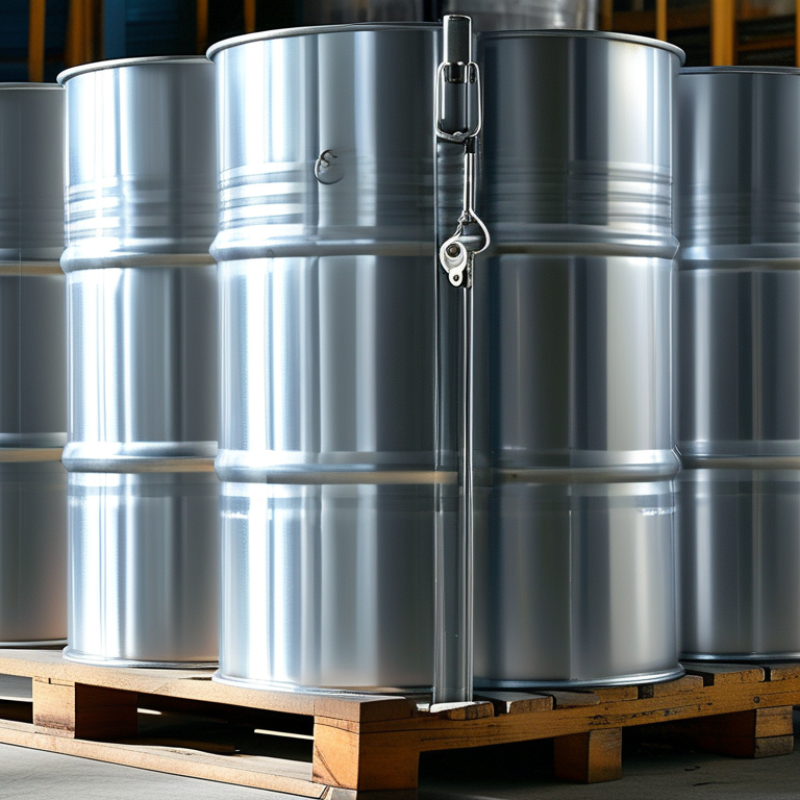
An iron drum is a rigid steel container designed to store, move, and protect liquids, powders, and certain solid materials. In industry, the term often describes a carbon-steel drum with a circular body, reinforced rims, and either an open or closed top. Its familiar shape is practical. A forklift can handle it. A pallet can hold it. A worker can inspect its seams.

The material choice also reflects steel’s industrial scale. The World Steel Association reported global crude steel production of about 1.89 billion tonnes in 2023. That supply supports many packaging applications, including steel drums, although not every steel product becomes a drum. The ISO 15750 series provides technical guidance for steel drums, including dimensions, closures, and performance requirements. These details matter when a container faces vibration, stacking pressure, temperature changes, or repeated handling.

An iron drum is commonly used for lubricants, paints, coatings, food ingredients, water-treatment materials, and industrial chemicals. Its value is not limited to strength. A properly selected lining can help separate the stored product from the steel wall. Closure design also affects leakage prevention and workplace safety. The UN Recommendations on the Transport of Dangerous Goods provide widely used guidance for packaging performance and transport testing. However, a drum is never automatically suitable for every material. Compatibility, certification, filling limits, and local regulations must be checked carefully. That point is easy to overlook. Steel feels dependable, but assumptions can fail. A dented rim, damaged gasket, or unsuitable lining may change the container’s performance completely.

What Is an Iron Drum and What Is It Used For?

Iron Drum Definition: Steel Construction and the Standard 208-Litre Capacity

What Is an Iron Drum and What Is It Used For?
An iron drum usually means a steel drum, not a container made from cast iron. Most modern drums use low-carbon steel because it balances strength, formability, and cost. ISO 15750-2:2012 covers steel drums with removable heads, while related standards address fixed-head designs. The familiar capacity is 208 litres, equal to approximately 55 US gallons. This figure is nominal, not the practical filling limit. Headspace is necessary for safe handling, expansion, and closure.
A 208-litre drum may have a tight steel body, rolled seams, two bung openings, or a removable lid. Protective coatings can reduce corrosion and help prevent contact between the steel and the contents. Typical uses include storing lubricating oils, coatings, powders, food ingredients, and other industrial materials. The container may stand on a pallet, move by forklift, or travel through a distribution warehouse.
The detail matters.
Industry handling guidance commonly treats empty space, drum orientation, and closure torque as safety-critical factors. UN packaging rules also evaluate performance through tests such as drop, leakproofness, and stacking tests. These marks describe tested packaging performance, not unlimited protection. A drum can still dent, rust, or fail when badly stored. The term “iron drum” remains widely understood, but it is technically imprecise. That small distinction affects material selection, corrosion control, and purchasing specifications.

How Iron Drums Are Made: Steel Sheets, Seams, Coatings, and Closures

An iron drum is usually made from steel, not pure iron. Its strength comes from shaped sheets and tightly joined seams. Manufacturers cut flat steel coils into panels, then roll them into a cylinder. The curved body is joined by a welded seam, creating a smooth barrier against leakage. Top and bottom plates are pressed into shape and attached with double seams. These folded joints overlap several metal layers. They need accurate pressure and consistent dimensions.

After forming, the drum is cleaned to remove oil, dust, and scale. A protective coating is then applied inside, outside, or on both surfaces. The choice depends on the stored material and expected environment. Internal linings can reduce corrosion, while exterior coatings help resist moisture and rough handling. Small surface defects still matter. A thin spot or missed edge can become a serious weakness over time.

Closures control access. Open-head drums use a removable lid, clamping ring, and gasket. Tight-head drums use threaded openings sealed with plugs. A gasket must fit evenly. Too much pressure may damage it. Too little may allow seepage. During inspection, workers check seams, coating coverage, rim shape, and closure alignment. A drum may look perfect but still fail after vibration, stacking, or temperature changes. That is why practical testing remains essential.

What Is an Iron Drum and What Is It Used For?

Steel drums are manufactured from formed steel sheets that are rolled into a cylindrical body and joined with a seamed closure. Protective coatings help reduce corrosion, while open-head covers or tight-head bungs provide different access and sealing options. The chart shows common nominal drum capacities, converted from US gallons to liters using 1 US gallon = 3.78541 liters. Actual usable fill volume depends on the product, headspace, closure design, and applicable transport regulations.

Iron Drum Types: Open-Head, Tight-Head, and 114-Litre to 208-Litre Sizes

An iron drum is usually a carbon-steel container used for storing and moving liquids, powders, and industrial materials. Its strength comes from rolled steel walls, reinforced rims, and secure closures. In practical handling, the surface should be checked for dents, rust, cracked seams, and damaged fittings. A clean appearance is not enough.

Open-head drums have a removable lid secured by a clamp ring. They suit powders, thick liquids, solid materials, and jobs requiring regular access. Cleaning and manual filling are easier. Tight-head drums have a permanently sealed top with small bung openings. They work better for thinner liquids and controlled pouring. Their narrow openings reduce exposure, but cleaning can become difficult. That detail is often underestimated.

Common capacities range from 114 litres to 208 litres. A 114-litre drum is easier to move through narrow work areas and may reduce handling strain. Larger 208-litre drums offer more volume, but they become heavy quickly when filled. Storage space, lifting equipment, and transport limits should guide the choice. Labels can sometimes confuse nominal capacity with usable capacity. Leave room for safe closure and liquid expansion.

Before use, confirm the drum’s material compatibility, closure condition, and interior coating. A steel drum may resist impact but still react poorly with certain contents. Keep containers upright on stable surfaces, away from heat and standing water. Follow current workplace, storage, and transport requirements. Small inspection records can prevent expensive mistakes.

What Iron Drums Store: Liquids, Powders, Chemicals, Oils, and Food Products

Iron drums, commonly made from carbon steel, store liquids, powders, chemicals, oils, and food products. Their strength protects contents during stacking, transport, and warehouse handling. ISO 15750 specifies performance requirements for steel drums, including dimensions, closures, and testing.

Liquid products may include lubricating oils, water-based materials, and industrial fluids. Powders need tight closures and suitable inner liners, because fine particles can settle around the lid. Chemical storage requires compatibility checks. A drum that handles alkaline material may fail with an acidic product. That mistake is more common than it should be.

Food products require clean, food-contact-approved interiors and controlled filling conditions. Linings can prevent steel contact, corrosion, and flavor changes. However, “food grade” should never be assumed from appearance alone. UNEP’s Global Resources Outlook 2024 reports that global resource extraction has tripled since 1970. Reusable steel packaging can support resource efficiency, but cleaning and inspection remain essential. The World Steel Association reported about 1.89 billion tonnes of crude steel production in 2023, showing the material’s industrial scale and supply strength.

Tips: Confirm the product’s density, temperature, and chemical compatibility before selection. Use liners for powders or reactive contents. Inspect dents, rust, seams, and closures before filling. For food use, request documented compliance and cleaning records. Small details matter.

Safety and Compliance: UN Packaging Codes, Load Limits, and ISO 15750 Standards

An iron drum, more accurately called a steel drum, is a rigid container made for storage and transport. Common sizes include 200 and 210 litres, but capacity does not equal permitted load. Product density, closure design, stacking pressure, and temperature all matter.

Safety begins with the UN packaging code stamped on the drum. Codes such as 1A1 identify a non-removable-head steel drum, while 1A2 identifies a removable-head design. The UN Recommendations on the Transport of Dangerous Goods, Model Regulations, require tested performance for impact, leakage, stacking, and pressure resistance. A code confirms tested packaging performance. It does not approve every substance or every transport route. Check the complete marking.

ISO 15750 defines important requirements for steel drums, including dimensions, openings, closures, and test-related construction details. In practice, inspectors should compare the drum’s marked maximum gross mass with the filled weight, then allow for pallets, vibration, and temperature expansion. A 210-litre drum may hold less than 210 litres safely. That detail is often missed. Industry inspection reports repeatedly identify damaged chimes, distorted lids, and loose closures as common handling risks. The UN Model Regulations and ISO 15750 provide a strong technical basis, but local transport rules may add requirements. Records should include batch details, test certificates, closure torque, and inspection dates. One weakness remains: paperwork can look complete while the drum is already compromised. Physical checks still matter.

What Is an Iron Drum and What Is It Used For? - Safety and Compliance: UN Packaging Codes, Load Limits, and ISO 15750 Standards

Data Dimension Typical Data or Requirement Safety and Compliance Relevance
Common Name Iron drum or steel drum “Steel drum” is the technically preferred term. These containers are generally used for liquids, powders, pastes, and solid materials.
Common Nominal Capacity Approximately 200–220 L; a widely used industrial size is about 210 L Nominal capacity is not the same as permitted filling volume. The container’s marked capacity, closure design, product properties, and transport rules must be checked.
Typical External Dimensions Approximately 570–610 mm diameter and 850–930 mm height for a 200–220 L drum Actual dimensions vary by construction, chime design, wall thickness, and closure type. Confirm dimensions before palletizing or loading.
Typical Empty Weight Approximately 16–25 kg for a standard 200–220 L steel drum The tare weight must be included when calculating gross mass and vehicle, pallet, rack, or lifting-equipment limits.
Steel Construction Carbon steel or other approved steel, commonly formed with rolled hoops, chimes, and a welded or seamed body Material selection and wall construction affect corrosion resistance, stacking strength, impact resistance, and compatibility with the contents.
Closure Types Non-removable head with bung openings, or removable head with a clamp ring Closures must be compatible with the contents and correctly tightened. Dangerous-goods packaging may require the closure configuration specified by the tested design.
Typical Applications Chemical liquids, lubricants, coatings, food ingredients, powders, waste materials, and industrial solids The drum must be selected for chemical compatibility, leakage prevention, temperature exposure, and the applicable storage or transport regulations.
UN Packaging Code: 1A1 Steel drum with a non-removable head A complete UN mark also identifies the packaging performance level, specific gravity or hydrostatic test pressure where applicable, maximum gross mass for solids, year, authorization country, and packaging approval reference.
UN Packaging Code: 1A2 Steel drum with a removable head The removable-head design is useful for solids, viscous materials, and materials requiring wider access, but the tested closure system must be used for regulated shipments.
UN Packaging Code: 1H1 and 1H2 Plastic drums with non-removable and removable heads respectively These are not steel drums, but they are often compared with steel packaging. Plastic compatibility, permeation, temperature limits, and aging must be evaluated separately.
UN Performance Levels Packaging groups are commonly identified as X, Y, or Z for higher, medium, or lower hazard levels The applicable performance level depends on the dangerous-goods classification and packing group. A general-purpose drum is not automatically approved for hazardous materials.
Load Limit Principle Permitted gross mass = tare weight + contents; the lower of the drum rating, UN mark, pallet rating, handling rating, and transport limit applies There is no single universal load limit for every steel drum. Always use the manufacturer’s specification and the complete UN certification information.
Illustrative Load Calculation 200 L of a liquid with a density of 1.00 kg/L weighs about 200 kg; adding a 20 kg tare gives approximately 220 kg gross mass This is a calculation example, not a certified limit. Headspace, expansion, density variation, stacking, and the marked gross-mass limit must also be considered.
Filling Practice Leave sufficient headspace; the exact filling percentage depends on the product, temperature range, and applicable regulations Overfilling can cause thermal expansion, pressure buildup, leakage, or failure of the closure. Dangerous goods require the applicable modal and regulatory rules.
ISO 15750-1 Steel drums—general requirements and test methods The standard addresses relevant steel-drum construction, dimensions, performance, and testing provisions. Compliance should be confirmed against the applicable edition and product specification.
ISO 15750-2 Plastic drums—general requirements and test methods This part applies to plastic drums rather than iron or steel drums and should not be used as the sole basis for approving steel packaging.
ISO 15750-3 Drum closure systems Closure dimensions and functional requirements support interchangeability and sealing performance, but they do not replace product-specific compatibility and dangerous-goods approval.
Stacking and Storage Stack only within the tested or specified stacking load and use stable, level surfaces Inspect for dents, rust, bulging, damaged chimes, leaking bungs, and deformed pallets. Do not stack damaged or incompatible drums.
Handling Equipment Use drum lifters, clamps, cradles, or pallets rated for the full gross mass Do not lift a drum by its bung, lid, rolling hoops, or clamp ring unless the equipment and procedure are specifically designed for that method.
Corrosion Protection Painted, plated, lined, or otherwise protected steel surfaces may be used depending on the contents The lining and coating must be chemically compatible. External corrosion can reduce wall strength and invalidate the packaging for transport.
Inspection Before Use Check body, seams, chimes, closures, labels, UN marks, corrosion, deformation, and leakage A drum that is damaged, contaminated, incorrectly closed, or missing required markings should not be used for regulated transport.
Compliance Reminder Verify the current UN Model Regulations and the applicable national, maritime, air, rail, or road transport requirements ISO conformity, a UN packaging mark, and safe workplace handling are related but separate requirements. The most restrictive applicable requirement controls.

Note: Capacities, dimensions, tare weights, and illustrative load calculations are typical reference values only. The certified design specification, complete UN marking, contents, temperature, handling method, and applicable transport regulations must be verified before use.